THE FUTURE OF LIVE PERFORMANCE
How physical sound stages are transforming through reactive motion graphics and ambient visual spaces.
MUSICALARENA 2026
SOUND BECOMES MOTION.

Musicalarena brings together live music, moving images, animation, and unforgettable event experiences. A space where performances become visual stories and every sound leaves an image behind.

We treat every performance as more than an event. Sound creates movement, movement creates atmosphere, and atmosphere becomes memory. Musicalarena connects artists, audiences, and animated worlds through experiences designed to be heard, watched, and remembered.
Receive new events, music stories, and animation releases directly to your inbox.
Changing direction? You can remove your email from the Musicalarena mailing list anytime.

"Between the first note and the final frame, there is a space where music becomes visual language."


Animation gives rhythm another body. A beat can become a moving line. A voice can become a shape. A performance can become a sequence of frames. Musicalarena explores that space between listening and seeing.
PERFORMANCES, LIVE VISUALS & STAGE EXPERIENCES FOR 2026.
LIVE AUDIO-VISUAL SYMPOSIUM
SYNTHESIS & FRAME ANIMATION
AMBIENT PERFORMANCE & GRAPHICS
GENERATIVE SOUND & LIGHT INSTALLATION
CLOSING NIGHT / AMBIENT FINALE
Night of Motion represents an intersection between improvised electronic acoustics and reactive frame animations. Designed as an immersive stage experiment, light projections respond in real-time to frequency changes generated by the artists.
Attendees move through the arena space freely as surrounding projections evolve across a 360-degree digital perimeter.
A two-hour live synthesis performance where every sound generates a visual bloom in real time. No pre-recorded visuals, no fixed sequences — only what the audio produces on the night.
Electric Bloom is a live synthesis performance built around a single principle: nothing that happens on stage has been decided in advance. Every projection, every frame, every shift of colour is generated on the night by the audio signal itself.
The two artists — Kael Nord and Veera — work in tandem, one shaping the sound field while the other sculpts the visual response. The room becomes a feedback loop: sound creating image, image influencing the next sound.
Audiences are encouraged to move freely through the space. There is no fixed seating arrangement. The performance is best experienced from multiple positions across the hall, as the visual field shifts continuously with each perspective.

A four-hour ambient performance built around the visual language of the Afterlight archive.
Afterlight Echo is the largest outdoor event in the 2026 programme. Set within an open arena under Bengaluru's winter sky, the performance extends the visual and sonic language of the Afterlight film archive into a four-hour live experience.
The stage itself is designed as a shifting canvas — three concentric rings of suspended screens that rotate slowly through the performance, casting light and image across the surrounding crowd at different angles depending on where the audience is standing.
Sound is delivered through a spatial array system that places instruments across the full width of the arena. Audiences are invited to walk through the performance, treating the space as an installation rather than a seated event.
Signal / Noise is not a concert. It is an environment — a warehouse-scale installation where sound and light are generated entirely by the movement of the people inside the room. Sensors placed throughout the space detect footfall, gesture, and proximity, feeding that data into a live synthesis engine that produces both the audio and the visual field.
There is no stage. There is no audience in the traditional sense. There is only the space, the people moving through it, and the response that emerges from the interaction between the two.
Attendance is organised in timed slots of 180 visitors each, ensuring that the installation maintains a specific density. The room behaves differently with twenty people than it does with one hundred and eighty — and both states are part of the work.
An eight-hour closing performance set along the western coastline, ending at midnight on 31 December 2026.

Terminal Velocity closes the 2026 season with an eight-hour continuous performance staged along the Goa coastline. The event is designed as a slow arc — beginning in late afternoon, passing through sunset, and concluding at midnight with a single ambient composition performed by the full resident roster of the 2026 programme.
The stage sits directly on the waterline, with the audience arrayed along a terraced shoreline. Sound is distributed through a spatial system that allows the performance to move across the width of the beach over the course of the evening — beginning quietly on one end and finishing as a wall of sound at the other.
There are no separate sets on the programme. Every artist performs as part of a continuous piece, handing off to the next without pause. Attendees are free to arrive and leave at any point during the eight hours.
THE 2026 SEASON CLOSES AT MIDNIGHT. THE 2027 PROGRAMME WILL BE ANNOUNCED IN JANUARY.
FIELD RECORDINGS & ANALOG SYNTHESIS
MODULAR ARPEGGIOS & AMBIENT DRONES
EXPERIMENTAL ACOUSTICS
GENERATIVE LOOP STUDIES, KINETIC FRAME EXPERIMENTS, AND HAND-DRAWN MOTION WORK FROM THE STUDIO ARCHIVE.
EVERY FRAME IN THIS LAB BEGINS AS A QUESTION — WHAT HAPPENS WHEN MOTION IS TREATED AS A MATERIAL RATHER THAN A DELIVERY FORMAT?
The Animation Lab collects short-form motion studies produced in-house between 2023 and 2026. Some are finished pieces; most are experiments that informed larger works. All are published here in their original timing, without audio, so the motion itself remains the subject.

GENERATIVE FRAME ANALYSIS BY VISUAL ARTIST MIRA
A two-minute generative study in which a single geometric shape is subdivided, rotated, and layered across 3,200 individual frames. Each frame was rendered from a mathematical seed value; no frame was drawn by hand. The piece explores how far a single primitive form can be pushed before it stops reading as itself.

HAND-DRAWN KINETIC LOOPS & WAVE MANIPULATION
Four minutes of traditional hand-drawn motion, created entirely on paper before being scanned and sequenced at twelve frames per second. The piece follows a single wave as it travels across a wide horizontal frame, deforming against invisible obstacles that only the line itself can perceive. It is the studio's longest hand-drawn work to date.

AUDIO-REACTIVE FRAME DRIVER BY STUDIO VELLUM
A short study in translating audio frequency data into continuous motion. The visual field is driven entirely by a 90-second ambient recording — every colour shift, every displacement, every frame duration is calculated from the underlying waveform. The result is a piece that cannot be repeated exactly, because it responds to the specific recording it was paired with.

RECURSIVE GROWTH SIMULATION BY KAEL NORD
A real-time growth simulation rendered in a live coding environment. The piece begins with a single point and expands outward according to a recursive branching algorithm — no keyframes, no fixed path. Every viewing produces a slightly different animation, since the growth is recalculated from the start each time the piece is run. This is the studio's first fully live-rendered work.
Every project begins with a single constraint — a shape, a phrase, a frequency, or a duration. Nothing is designed until the constraint is defined.
The frame is constructed — sometimes by hand, sometimes by code, sometimes by both. Every version is preserved, including the failures.
Timing is treated as a material, not an afterthought. Frame duration, easing, and loop points are decided last and with the most care.
Every finished piece enters the archive unchanged. Revisions are published as separate entries so the original work remains intact.
WE LISTEN.
WE WATCH.
WE MOVE.
WE REMEMBER.
MUSICALARENA was founded under a simple realization: contemporary sound does not exist in isolation. Modern audiences experience music as an interconnected landscape of motion graphics, visual art, stage lighting, and digital memory.
We operate as an independent cultural platform bridging live performances, experimental animation journals, and event curation.
MUSICALARENA began in 2021 as a small editorial experiment. A group of musicians, animators, and event producers had grown tired of watching sound culture fragment across platforms — one app for listening, another for visuals, a third for finding out where a performance was actually happening. They wanted to build a single place that treated all three as one discipline.
The first public output was a single live event — a two-hour audio-visual performance staged in an abandoned textile warehouse. No tickets, no press, no sponsors. Forty people came. All forty stayed for the full two hours. That evening confirmed what the team had suspected: audiences were hungry for work that refused to separate the sound from the image from the room.
Five years later, the platform has produced more than sixty events, published three hundred and forty editorial pieces, and archived over four hundred animation studies. The principles remain exactly the same as they were on the first night: no advertising, no sponsored content, and no separation between the disciplines we cover.
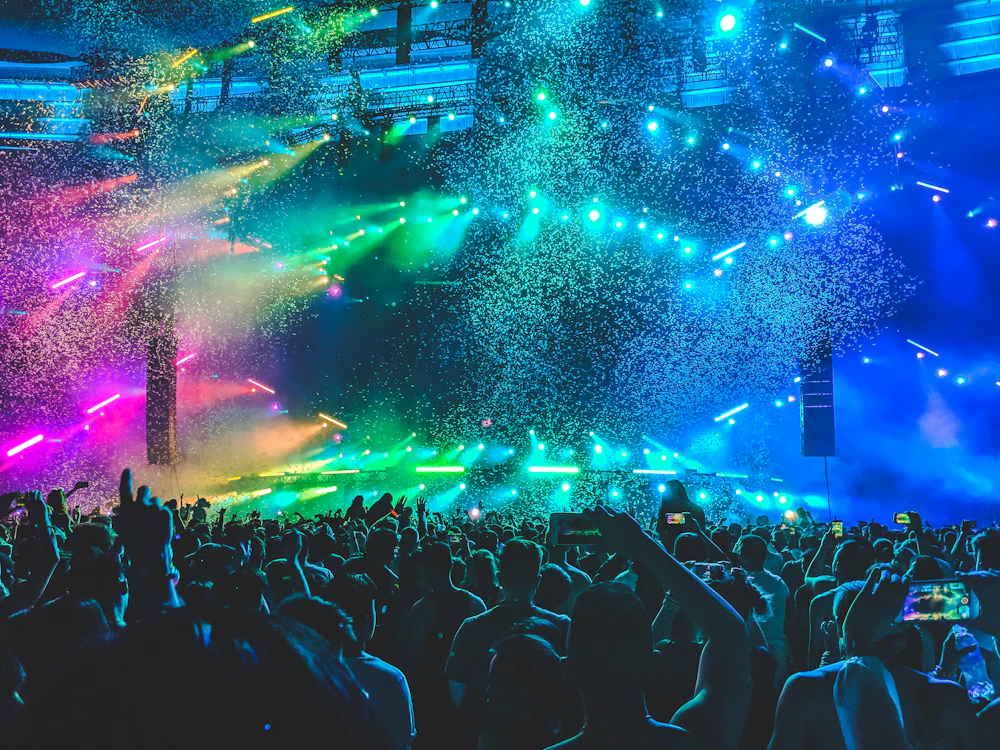
Events, stage performances, and installation work from the studio and its collaborators. Documented in full, archived without edits.
Generative, hand-drawn, and audio-reactive motion work. Short-form pieces published in their original timing and format.
Long-form writing on sound culture, motion design, and the shifting economics of independent production.
"SOUND WAS NEVER SEPARATE FROM IMAGE. THE INDUSTRY JUST SOLD THEM SEPARATELY."
We accept no advertising from record labels, streaming platforms, or event sponsors. Every event is self-funded or ticketed, and every editorial piece is written without external interference.
We write and publish for readers who will still be interested in a piece three years from now. Anything that would read as dated within a season is not worth publishing.
We cover sound, motion, and live work under a single editorial umbrella because that is how audiences actually experience them. We do not fragment culture into departmental categories.
Every event, essay, and animation study is archived in full. We do not delete old work. Revisions are published as new entries so the original remains intact.
Sound artist and long-time collaborator with the studio. Leads editorial direction and event programming.
Oversees the animation lab and archival motion work. Author of Geometric Echoes and related studies.
Runs live event production and technical architecture. Composer of Terminal Bloom and related live work.
Writes on sound culture and independent production economics. Author of the ongoing Culture column.
We accept a small number of outside contributions every season — motion studies, long-form essays, live event proposals, and photographic portfolios that fit the editorial voice of the platform. Contributors are paid at a rate agreed in advance, and every accepted piece is edited in close collaboration with the author.
We are most interested in work that argues a position or presents an unfinished experiment rather than restating what is already known. If you are writing to tell readers that something exists, we are probably not the right platform. If you are writing to tell readers what it means, we would like to hear from you.
Pitches may be sent at any time to desk@musicalarena.com. We respond to every submission, though we cannot guarantee acceptance.
LONG-FORM WRITING ON LIVE SOUND, MOTION CULTURE, AND THE INDEPENDENT PRODUCTION ECONOMY. PUBLISHED MONTHLY. NO SPONSORED CONTENT.
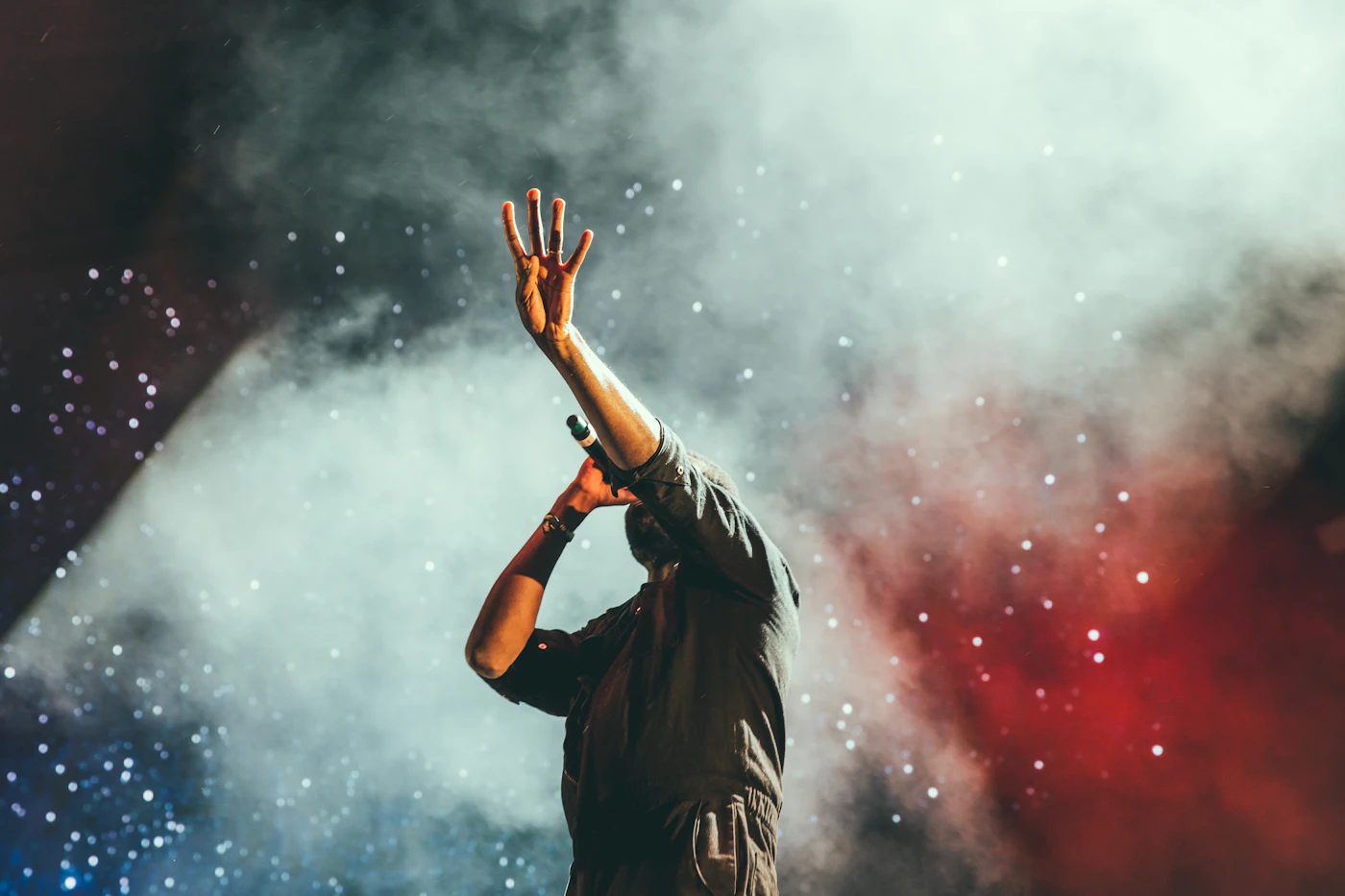
A REPORT FROM THE FIRST SEASON OF REACTIVE STAGE ARCHITECTURES — ROOMS BUILT TO RESPOND IN REAL TIME TO THE CROWD THAT FILLS THEM.
For most of the last century, live performance was a one-way transmission: the artist on stage, the audience in the dark. That model is beginning to change. A new generation of stages is being built with sensor arrays, spatial audio, and reactive lighting systems that treat the audience as an instrument.
How physical sound stages are transforming through reactive motion graphics and ambient visual spaces.
An exploration into visual rhythm and how moving frames alter auditory perception during live sets.
Documenting the sub-cultures of late-night experimental acoustic gatherings across Asia.
Why small venues are becoming the most important infrastructure in live sound — and what they still cannot afford.
How code-driven visual systems are replacing fixed lighting rigs in contemporary performance architecture.
On the growing appetite for seated, silent, phone-free performance — and why audiences are willing to pay for it.
Arena Notes is not a blog and it is not a content feed. It is a monthly archive of long-form writing about live sound, motion culture, and the independent production economy. Every piece is written slowly, edited carefully, and published only when it is ready.
Some months we publish two essays. Other months, none. What we do not do is publish filler — pieces that exist only to fill a calendar or satisfy an algorithm. If a piece does not earn its place in the archive, it does not appear.
We do not run sponsored content. We do not accept payment in exchange for coverage. Every piece in this journal reflects the honest and considered opinion of the writer who wrote it.
LAST UPDATED: SEPTEMBER 2026
At MUSICALARENA, accessible from musicalarena.com, one of our main priorities is the privacy of our visitors. This Privacy Policy document contains types of information that is collected and recorded by MUSICALARENA and how we use it.
We collect information directly provided by users, such as email addresses submitted via our newsletter subscription interfaces or contact details provided through event booking forms. Newsletter storage is maintained via local client preferences in accordance with web standards.
Information collected is strictly utilized to send performance updates, editorial journals, and event invitations. We do not sell, trade, or transfer email databases to third-party entities.
MUSICALARENA utilizes browser local storage mechanisms exclusively to store user newsletter preferences and subscription statuses without tracking user behavior across external websites.
EFFECTIVE DATE: 2026
Welcome to MUSICALARENA. By accessing our website, attending our live performances, or interacting with our digital animation laboratory, you agree to comply with and be bound by the following terms and conditions.
All editorial text, custom animation loops, artwork, audio recordings, and visual compositions displayed on MUSICALARENA are protected under international copyright laws. Reproduction without explicit written authorization is strictly prohibited.
Attendees of MUSICALARENA live events must respect performance spaces, artists, and fellow spectators. We reserve the right to deny admission to any individual engaging in disruptive behavior.